Introduction
Communities and societies are developed and sustained through the collective participation of both men and women in social, cultural, economic and household activities. In every society, women contribute significantly to family welfare, cultural continuity and community development. Particularly in indigenous communities, women play an important role in preserving traditional knowledge, customs, language and social practices. Their participation in agriculture, household management, weaving, food production and cultural activities forms an essential part of community life and identity. However, despite their extensive contributions, women often experience unequal access to decision-making, limited control over resources and inadequate recognition of their labour. Within patriarchal social structures, much of women’s work is treated as a natural responsibility rather than a valuable social and economic contribution.
The Mising community, one of the largest indigenous communities of Assam, reflects many of these realities. The community has preserved its rich cultural heritage and traditional practices for generations. Within this social structure, Mising women play a crucial role in maintaining family life, economic activities and cultural traditions. They actively participate in agriculture, weaving, household responsibilities, childcare and community activities. Their labour and participation contribute greatly to the preservation of Mising culture and identity.
As a woman belonging to the Mising community, I have observed how women contribute extensively to both family and community life while often carrying unequal responsibilities and receiving limited recognition, decision-making power and social support for their labour. From childhood, Mising girls witness mothers, grandmothers and other women balancing multiple responsibilities within the household and beyond. These experiences inspired this reflection on the contributions and challenges of Mising women from a feminist perspective.
Despite their significant contributions, Mising women continue to experience challenges related to gender roles, unequal division of labour and social expectations. Much of their work remains unpaid, unnoticed and taken for granted within both family and society. This article is a reflection on women’s role in Mising society based on personal observations, experiences, existing literature and engagement with the lives of women within the Mising community. While Mising women are often celebrated for preserving culture and tradition, it is equally important to examine the unequal burdens, expectations and responsibilities placed upon them. Therefore, this article explores the contributions of Mising women while critically reflecting on issues of gender, labour, recognition and identity within the community.
Gender Roles in Mising Society
Gender roles in Mising society are shaped by cultural traditions, social expectations and customary practices. Women and men participate in different spheres of social and economic life, with responsibilities often divided along gender lines. Mising women play an important role in agriculture, weaving, household management, childcare and the preservation of cultural traditions. Men, on the other hand, are often associated with community leadership, decision-making and certain economic activities. Although women contribute significantly to family and community life, much of their labour remains unpaid and is often considered a natural responsibility rather than productive work. From a feminist perspective, these gendered roles influence women’s access to recognition, decision-making power and social status within the community.
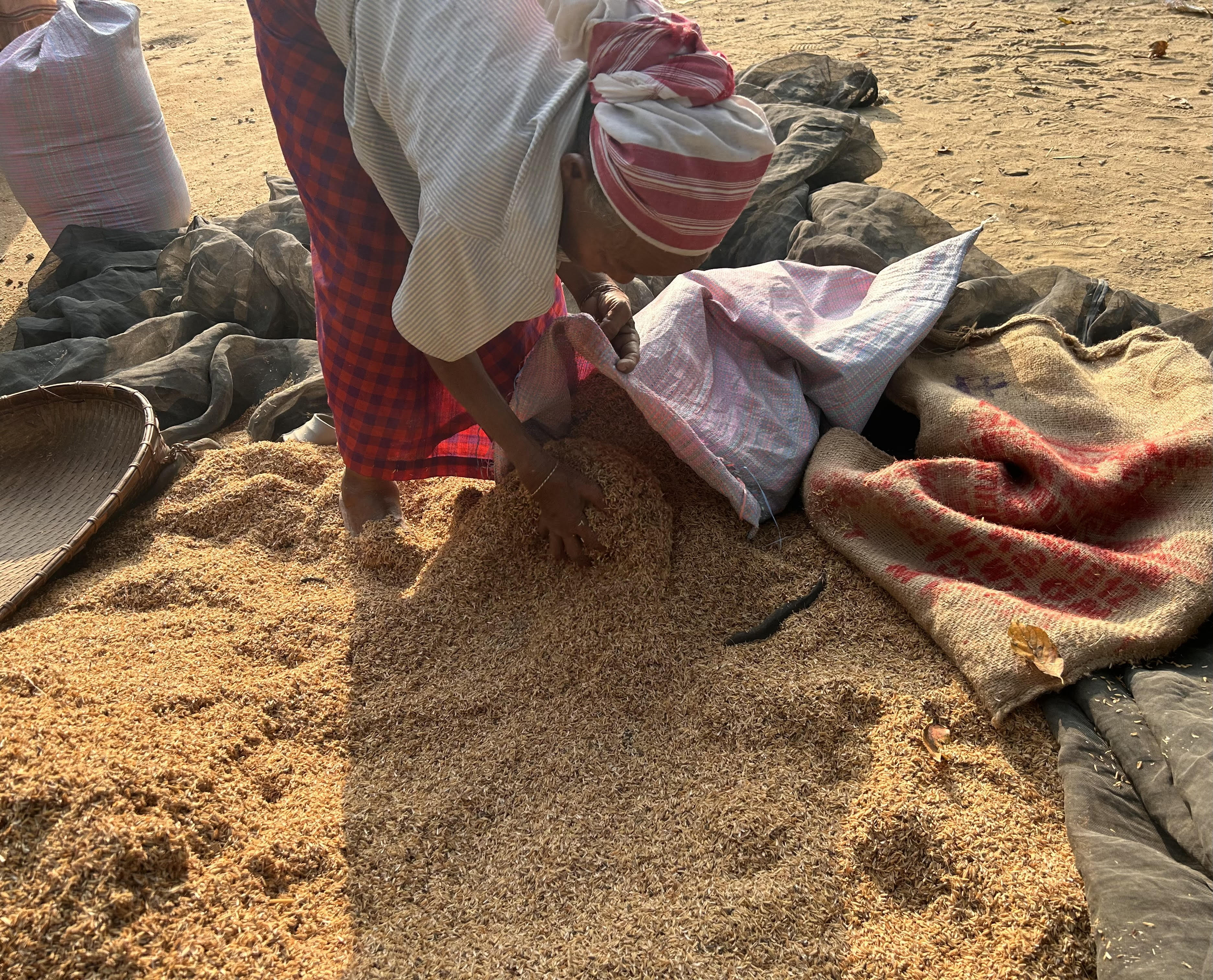
Paddy drying and collecting after harvest (Picture by Author)
Gender roles within Mising society are reflected not only in the division of labour but also in everyday social practices and cultural expectations. From an early age, girls and boys are often socialised into different responsibilities. Girls are commonly expected to assist with household work, caregiving and the learning of traditional skills such as weaving, while boys are generally encouraged to participate in activities associated with public life and community affairs. Gender expectations may also influence educational opportunities and future aspirations for girls and boys. Such experiences demonstrate how gender norms continue to shape opportunities and responsibilities within everyday life.
At the same time, Mising women are not merely passive participants within these structures. They actively contribute to the economic, social and cultural life of the community and play a crucial role in preserving indigenous identity. However, feminist perspectives encourage a critical examination of how cultural expectations and gender norms shape women’s experiences. Understanding these gender roles is important for examining both the contributions and challenges experienced by Mising women and for reflecting on the possibilities for greater gender equality within the community.
Feminist Perspectives, Gender and Intersectionality
One of the most influential feminist thinkers, Simone de Beauvoir (1953), stated in her book, The Second Sex, that “One is not born, but rather becomes, a woman.” This statement explains how society shapes gender roles and expectations for women. From childhood, girls are taught how to behave according to social expectations. Women are expected to become caring, responsible, obedient and hardworking within the family and society. In the Mising community, girls often learn weaving, cooking, cleaning and caregiving from an early age. These responsibilities are considered an important part of womanhood. Many girls grow up hearing that, in order to become a “good woman,” they must learn household responsibilities and traditional skills. In many situations, these expectations are sometimes given greater importance than girls’ education.
Feminist perspectives explain that such gender roles are socially constructed through culture and tradition rather than determined by biology. Women are expected to manage domestic and cultural responsibilities, while men are more commonly associated with public roles and decision-making. Even biological experiences such as menstruation often become part of gender expectations. Once girls reach puberty, society begins to treat them differently and expects them to behave more responsibly and carefully. Women are often taught values such as sacrifice, patience and caregiving, while these expectations are not equally imposed on men. Men are rarely criticised for lacking household skills such as cooking, cleaning or caregiving, whereas women are often judged for not knowing these responsibilities.
The experiences of Mising women can also be understood through Kimberlé Crenshaw’s (1991) concept of intersectionality. Crenshaw argues that women experience multiple forms of inequality that cannot be understood through gender alone. In the case of Mising women, their lives are shaped not only by patriarchal gender relations but also by their position within an indigenous and historically marginalised community. As women, they are expected to perform domestic work, caregiving and cultural responsibilities. At the same time, as members of an indigenous community, they are often expected to preserve language, customs, traditions and collective identity. These overlapping responsibilities create a unique experience that differs from that of both Mising men and women from dominant social groups. Therefore, understanding the lives of Mising women requires paying attention to the intersection of gender, culture, ethnicity and social location.
The work of feminist scholar Nancy Chodorow (1978) further helps in understanding women’s roles within the family and community. Chodorow argues that caregiving and nurturing responsibilities are socially associated with women and motherhood. As a result, women often become the primary caregivers within families, and these responsibilities are viewed as natural characteristics rather than socially assigned roles. Within the Mising community, women are frequently expected to care for children, elderly family members and the household while simultaneously contributing to agriculture and cultural activities. A feminist perspective encourages critical examination of why caregiving responsibilities continue to be assigned primarily to women and how these expectations influence women’s opportunities, choices and autonomy.
Mising Women’s Labour, Weaving and Cultural Responsibilities
Mising women contribute significantly to both household and economic activities. As a member of the Mising community, I have observed how women continuously balance multiple responsibilities within the family and society. Their labour extends far beyond domestic work and includes agriculture, weaving, food preparation, childcare, caregiving and participation in community activities. Despite the central role they play in sustaining family and community life, much of their labour remains invisible or is taken for granted.
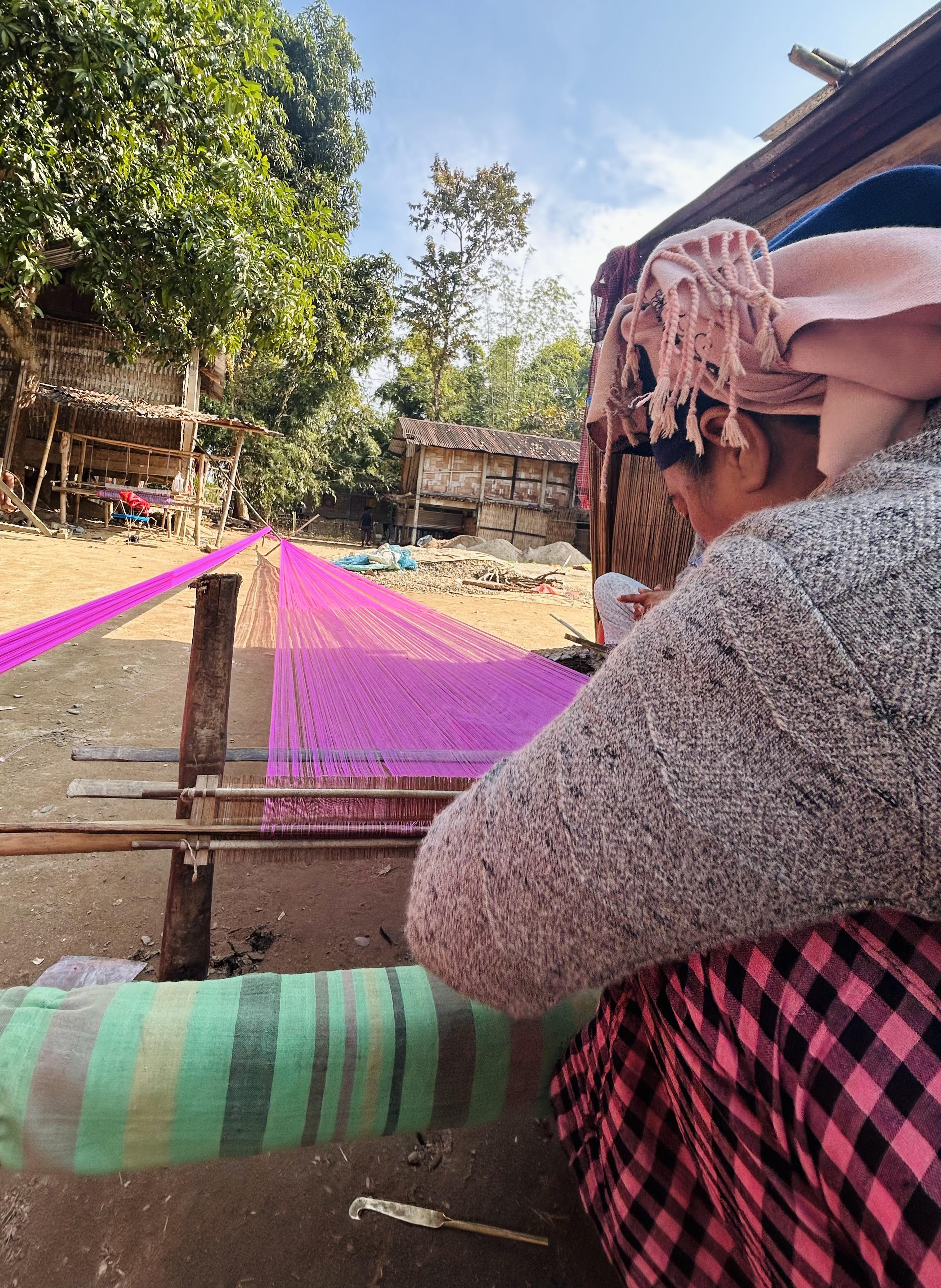
Traditional Weaving done by Mising Women (Picture by Author)
One of the most important cultural roles performed by Mising women is weaving. Traditional weaving is not only an economic activity but also a powerful symbol of cultural identity and continuity. From childhood, many Mising girls observe their mothers, grandmothers and other women weaving traditional garments and textiles. Through observation and practice, girls gradually learn these skills and become responsible for preserving an important aspect of Mising culture. Weaving is therefore often regarded as a marker of womanhood and cultural belonging within the community.
While the preservation of culture is valuable and necessary, feminist perspectives encourage us to question why the responsibility for cultural preservation is placed primarily upon women. Women are often expected to maintain traditional practices, transmit cultural knowledge and uphold community identity while simultaneously fulfilling domestic and economic responsibilities. Such expectations demonstrate how culture and gender become closely intertwined in women’s everyday lives.
Feminist scholars have long argued that women’s labour within the household is frequently treated as a natural duty rather than productive work. Activities such as cooking, cleaning, childcare and caregiving are often viewed as expressions of women’s love and responsibility rather than as forms of labour that contribute to the functioning of families and communities. This tendency can make women’s work less visible and less valued compared to work performed in the public sphere.
The feminist slogan “The personal is political” helps explain how everyday experiences within the household are connected to wider systems of social inequality. In the lives of Mising women, responsibilities that appear personal or family-oriented often reflect broader social expectations about gender. Women are frequently praised for their dedication, sacrifice and ability to manage multiple responsibilities. However, such praise can sometimes suppress discussions about the unequal distribution of labour and responsibility within the family.
From a feminist economic perspective, it is also important to examine who benefits from women’s labour. Weaving and rice-beer production are often celebrated as important cultural practices and symbols of women’s skill and dedication. However, cultural recognition does not always translate into economic recognition. Women invest significant amounts of time, knowledge and labour in these activities, yet the value generated from such work is not always equally acknowledged. Feminist critiques therefore encourage a closer examination of how women’s labour contributes to both cultural preservation and local economies while often remaining undervalued.
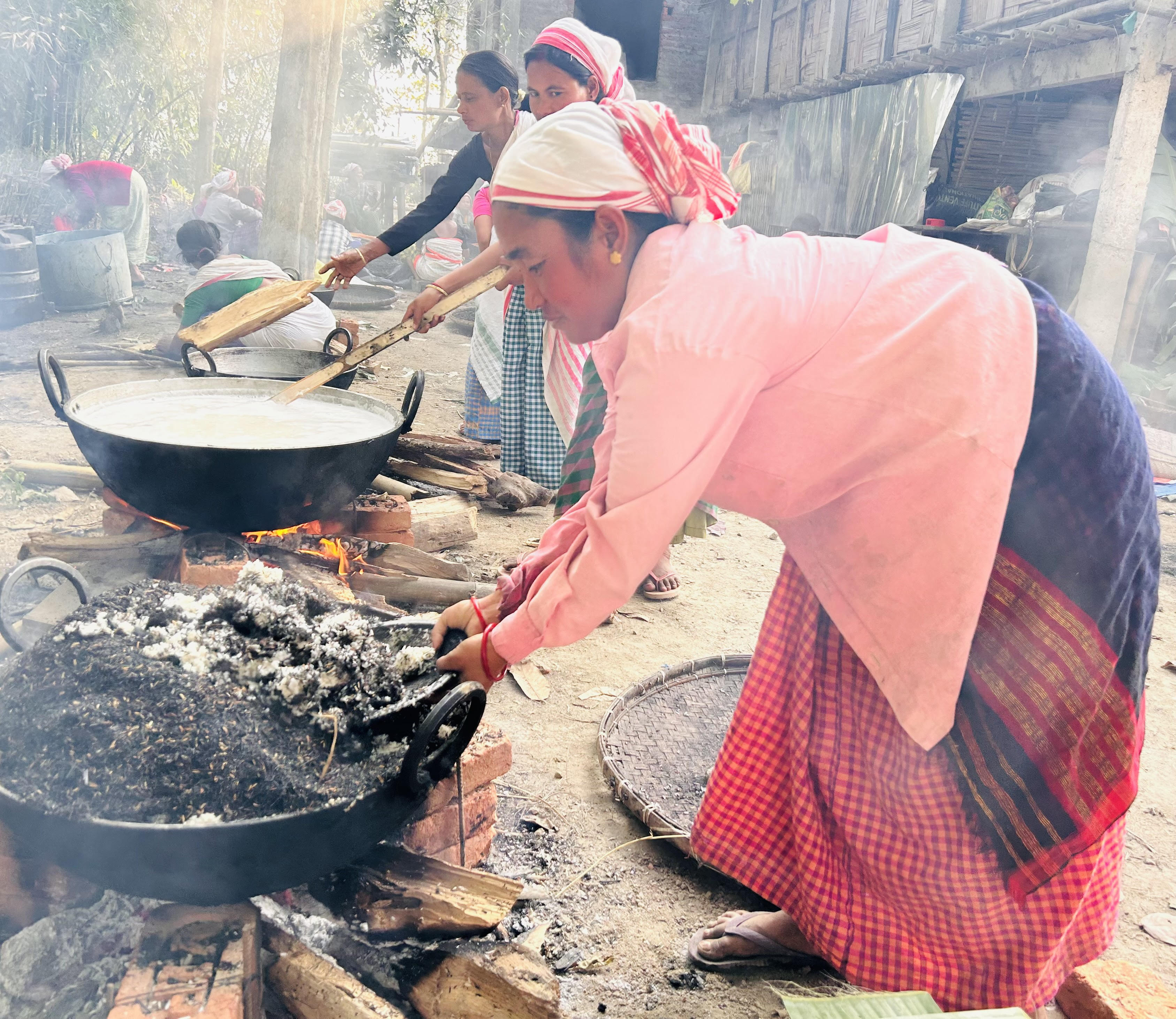
Preparation of Poro Apong (Rice Beer) (Picture by Author)
The concept of the sexual division of labour is also important in understanding the experiences of Mising women. Women are generally expected to perform reproductive labour such as childcare, cooking, cleaning and emotional care, while men are more commonly associated with public roles and decision-making. This division creates unequal recognition between men’s and women’s work. Although both forms of labour are essential, work performed by women is often considered less important because it occurs within the domestic sphere.
My interactions and conversations with women regarding their everyday responsibilities revealed how deeply these gender expectations have become internalised. Many women explained that managing household responsibilities was simply part of being a woman. Several participants stated that they did not expect assistance from husbands or other family members because such responsibilities had traditionally been performed by women. Although some acknowledged that these duties could be physically and emotionally demanding, they nevertheless accepted them as natural obligations.
Such experiences demonstrate how patriarchy operates not only through formal structures but also through social conditioning and cultural beliefs. From a feminist perspective, the issue is not that women perform household responsibilities; rather, the concern lies in the assumption that these responsibilities belong exclusively to women. Gender equality requires a more equitable sharing of responsibilities and greater recognition of women’s labour within both the household and society.
Critique of Gender Roles: Reading Mising Society Through a Feminist Lens
In the article “The Women’s Position in Mising Society,” Taburam Taid (2016) discusses the everyday lives, responsibilities and social position of women within the Mising community. The article presents women as hardworking and central to both family and community life. It explains how women wake up very early in the morning and continue working throughout the day by managing household responsibilities, preparing food, caring for family members and supporting agricultural activities. Women’s labour is portrayed as essential for maintaining both the household and the broader social structure of the community. The article also highlights the important role of women in preserving culture through weaving, domestic work and community responsibilities.
One of the most significant statements in the article is “Man for the field, woman for the hearth.” However, the article emphasizes that Mising women’s lives extend beyond this traditional expression. Taid highlights that Mising women actively participate not only in household responsibilities but also in agriculture and other productive activities outside the home. Therefore, while the statement reflects a conventional understanding of gender roles, it does not fully capture the diverse contributions of Mising women within the community. This expression symbolically represents the traditional division of labour between men and women. Men are often associated with fieldwork, public activities and productive labour, while women are connected with household responsibilities and domestic duties. Such expressions are often viewed as cultural wisdom and accepted as natural features of social life. However, feminist perspectives encourage us to critically examine the assumptions underlying these ideas.
From a feminist perspective, the statement reflects socially constructed gender roles that assign different responsibilities and expectations to men and women. Although these roles are often justified through culture and tradition, they may also contribute to unequal recognition and value between men’s and women’s labour. Work performed by men in public spaces is often more visible and socially recognised, whereas women’s work within the household tends to be normalised and taken for granted despite its importance.
Many writings on indigenous communities celebrate women’s dedication, hard work and cultural contributions. Such recognition is important because it acknowledges the vital role women play in sustaining family and community life. However, feminist analysis moves beyond appreciation and asks critical questions about power, responsibility and equality. Celebrating women’s labour should not prevent us from examining whether these responsibilities are equally shared or whether women have equal opportunities to participate in decision-making processes.
As a member of the Mising community, I have often encountered representations of women that emphasise sacrifice, patience and dedication. While these qualities deserve respect, such portrayals can sometimes create the impression that women are naturally responsible for carrying the majority of domestic and cultural responsibilities. Feminist perspectives challenge this assumption by arguing that gender roles are socially produced rather than naturally determined. Therefore, responsibilities related to family care, household work and cultural preservation should not be viewed as obligations belonging exclusively to women.
The romanticisation of tribal and indigenous communities as completely egalitarian societies also requires careful examination. Compared to many other social contexts, indigenous women may enjoy certain forms of participation and visibility within community life. However, this does not necessarily mean that gender inequalities are absent. Women may still experience unequal expectations, unequal distribution of labour and limited participation in some forms of authority and decision-making. A feminist perspective therefore encourages a more balanced understanding that recognises both the strengths of indigenous communities and the gender challenges that continue to exist within them.
Examining Mising society through a feminist lens does not mean rejecting cultural traditions or community values. Rather, it means creating space for critical reflection on how traditions influence women’s lives and opportunities. Such reflection can contribute to a more inclusive understanding of culture, one that values women not only for their labour and sacrifices, but also as individuals with their own aspirations, identities and rights.
Education, Empowerment and Identity
In recent years, education has created new opportunities for Mising women. Increasing numbers of women are entering higher education, government services, social organisations and leadership positions. Education has contributed to greater awareness regarding women’s rights, gender equality, self-identity and empowerment. It has enabled many women to question traditional assumptions about gender roles and to participate more actively in public life. However, access to education is not always experienced equally by girls and boys. For example, in some families with limited economic resources, greater priority is often given to the education of sons. Sons are sometimes sent to private schools, while daughters are expected to adjust to public schooling or other available opportunities. Even when girls attend school, they are often expected to assist with household responsibilities and caregiving work after school hours, whereas boys may have more time available for studying. Such gendered expectations can influence educational experiences, opportunities and future aspirations. These realities demonstrate that although education has expanded opportunities for Mising women, gender norms continue to shape their everyday lives and access to equal opportunities.
Despite these positive developments, many women continue to face challenges in balancing traditional expectations with modern aspirations. Women often experience a double burden in which they pursue education or employment while continuing to perform the majority of domestic responsibilities. Although opportunities have expanded, patriarchal attitudes and social expectations continue to influence women’s mobility, choices and freedom. In many cases, women are expected to prioritise family responsibilities even when they have educational or professional ambitions of their own.
Within the Mising community, many women from earlier generations were unable to access higher education because of economic difficulties, early marriage and greater emphasis on domestic responsibilities than formal education. Even when girls understood the importance of education, their aspirations were not always valued as highly as those of boys. Educational opportunities were often shaped by social expectations regarding marriage, caregiving and household work.
As a member of the Mising community, I have observed significant changes in attitudes towards women’s education over time. Compared to previous generations, more families now encourage girls to pursue higher education and professional careers. However, these positive changes have not completely removed traditional expectations. Many young women continue to navigate tensions between personal ambitions and social responsibilities. They are often expected to excel academically or professionally while simultaneously fulfilling cultural and family obligations.
Feminism, Culture and Identity
The relationship between feminism and culture is often complex. Feminist perspectives do not seek to reject culture or tradition; rather, they encourage critical reflection on how cultural practices influence the lives of women. This reflection is particularly important within indigenous communities, where women are frequently entrusted with the responsibility of preserving collective identity and cultural continuity.
Mising women play a crucial role in preserving language, dress, customs, festivals, oral traditions and community values. Their contributions have been central to the survival and continuity of Mising cultural identity across generations. Through weaving, storytelling, participation in festivals and the transmission of traditional knowledge, women act as important custodians of culture. Their role in protecting and sustaining indigenous identity deserves recognition and appreciation.
At the same time, feminist perspectives encourage us to question whether the responsibility of cultural preservation is distributed equally among all members of the community. Women are often expected to carry the primary responsibility of maintaining traditions while also fulfilling domestic, economic, and caregiving duties. For example, during Ali-Aye-Ligang celebrations, women wear the traditional Ege-Gasor, while men mostly wear Mibu Galuk over a shirt along with trousers or jeans rather than the complete traditional attire consisting of both the Mibu galuk and Gonro Ugon. In contrast, women’s adherence to proper traditional dress is often more closely observed and emphasized, and failure to do so is more likely to be noticed or questioned. In many cultural occasions, women’s attire is more closely monitored and emphasized than men, thus placing greater visibility and responsibility on women in representing cultural identity. Similarly, traditional spaces within the Mising Chang okum (House on Stilts) also reflect gendered cultural norms. Women of the household generally sit in the Koktok, located on the western side of the house, while the eastern side, known as Rísíng, is traditionally considered the seating space for men. Such practices demonstrate how cultural traditions often assign different roles, responsibilities, and spaces to women and men. While these customs remain important aspects of Mising cultural identity, a feminist perspective highlights how the burden of preserving and representing culture frequently falls more heavily on women, which may limit their opportunities for self-expression and personal choice.
An intersectional feminist perspective is particularly useful in understanding these realities. Mising women often experience both gender-based expectations and the responsibilities associated with belonging to an indigenous community. They are expected not only to fulfil traditional roles as women but also to act as guardians of cultural identity. These overlapping expectations demonstrate how gender and cultural identity intersect in shaping women’s experiences.
At the present time, many societies are moving towards greater gender equality. However, traditional gender roles continue to influence everyday life in many communities. Practices that are often celebrated as cultural values may also contain assumptions about women’s responsibilities and behaviour that deserve critical examination. Respecting culture does not require accepting all social inequalities associated with it.
Therefore, feminist discussions on Mising women should move beyond viewing women solely as preservers of culture and tradition. Women should also be recognised as individuals with their own aspirations, ambitions, rights and identities. Gender equality does not mean abandoning culture; rather, it means creating conditions in which women can participate in cultural life with dignity, freedom and equal opportunities. I strongly believe that a truly inclusive society is one that values both cultural continuity and gender justice.
Conclusion
The experiences of Mising women reflect both resilience and challenges within contemporary society. Through their participation in agriculture, weaving, household management, caregiving and cultural preservation, Mising women make significant contributions to family life, community development and the continuity of indigenous identity. Their labour, knowledge and skills remain central to the social and cultural foundations of the Mising community.
This reflection has examined the lives of Mising women through a feminist perspective to highlight both their contributions and the challenges they continue to face. While women are widely recognised as custodians of culture and tradition, feminist analysis encourages deeper examination of the unequal responsibilities and expectations that often accompany these roles. Women’s contributions should not be understood only in terms of sacrifice and service but also in relation to questions of recognition, agency, equality and social justice.
Drawing upon the insights of Simone de Beauvoir, Kimberlé Crenshaw and Nancy Chodorow, this article has argued that the experiences of Mising women are shaped by the intersection of gender, culture and social expectations. Mising women not only navigate patriarchal gender roles but also often carry the responsibility of preserving indigenous identity and cultural continuity. These overlapping expectations create unique challenges that require critical attention.
The discussion has also demonstrated that women’s labour, particularly within the household and cultural sphere, is often treated as a natural duty rather than recognised as valuable work. Activities such as caregiving, weaving, household management and cultural preservation contribute significantly to the well-being of families and communities, yet they frequently remain undervalued. Feminist perspectives remind us that recognising women’s labour is essential for achieving greater gender equality.
At the same time, it is important to acknowledge the positive transformations taking place within the Mising community. Increased access to education, greater awareness of women’s rights and expanding opportunities for social and economic participation have enabled many women to pursue new aspirations and challenge traditional limitations. However, significant challenges remain, particularly in relation to unequal responsibilities, patriarchal attitudes and social expectations that continue to shape women’s everyday lives.
Therefore, gender equality does not require the rejection of culture and tradition. Rather, it requires creating a society in which women are valued not only as preservers of culture but also as individuals with equal rights, dignity, aspirations and freedom. By encouraging critical reflection on gender roles while respecting cultural identity, it becomes possible to build a more inclusive and equitable future for Mising women and for the community as a whole.
References
Bhasin, K. (2004). Understanding gender. Women Unlimited.
Chodorow, N. (1978). The reproduction of mothering: Psychoanalysis and the sociology of gender. University of California Press.
Crenshaw, K. (1991). Mapping the margins: Intersectionality, identity politics, and violence against women of color. Stanford Law Review, 43(6), 1241–1299.
de Beauvoir, S. (1953). The second sex (H. M. Parshley, Trans.). Jonathan Cape. (Original work published 1949).
Pegu, R. (2015). The role of Mising women and their socio-economic status in Mising society: A new perspective. Journal of Tribal Intellectual Collective India (JTICI), 3(1), 1-12.
Kuli, J. J. (2012). The Misings: Their history and culture (2nd ed.). Kaustubh Prakashan.
Kuli, J. J. (2014). Mising society and culture. Kaustubh Prakashan.
Menon, N. (2012). Seeing like a feminist. Zubaan.
Taid, T. (2016). Mising samajot narir sthan [The women’s position in Mising society]. In R. Pegu (Ed.), Gomlab Alang: An anthology of articles on Mising literature in Mising & Assamese language (pp. 153–157). Centre for Studies on Language, Dibrugarh University.

Be First to Comment